01 · Cloud infra
Cloud computing & cloud infrastructure
Container orchestration, cloud-native control planes, and distributed services.
Kubernetes
Service meshes
Control planes
Explore the industries and systems powered by Go — from cloud infrastructure and DevOps tooling to fintech rails, AI infrastructure, and distributed platforms. A structured, business-grade map of where Golang is used in the real world.
Four quick visual snapshots of Go in action — from the 247golang workspace to cloud infra, DevOps platforms, and fintech trading systems. These images mirror the galleries you can explore on this site.

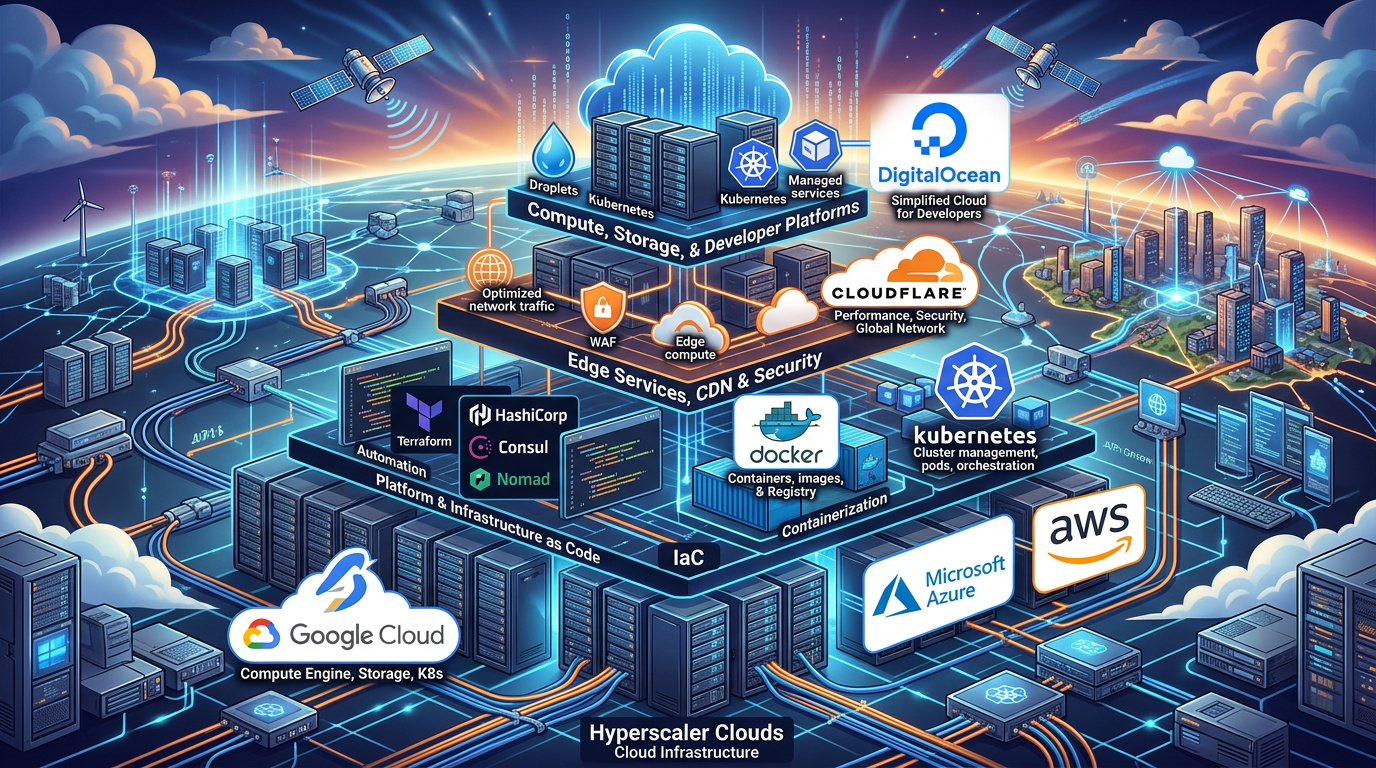
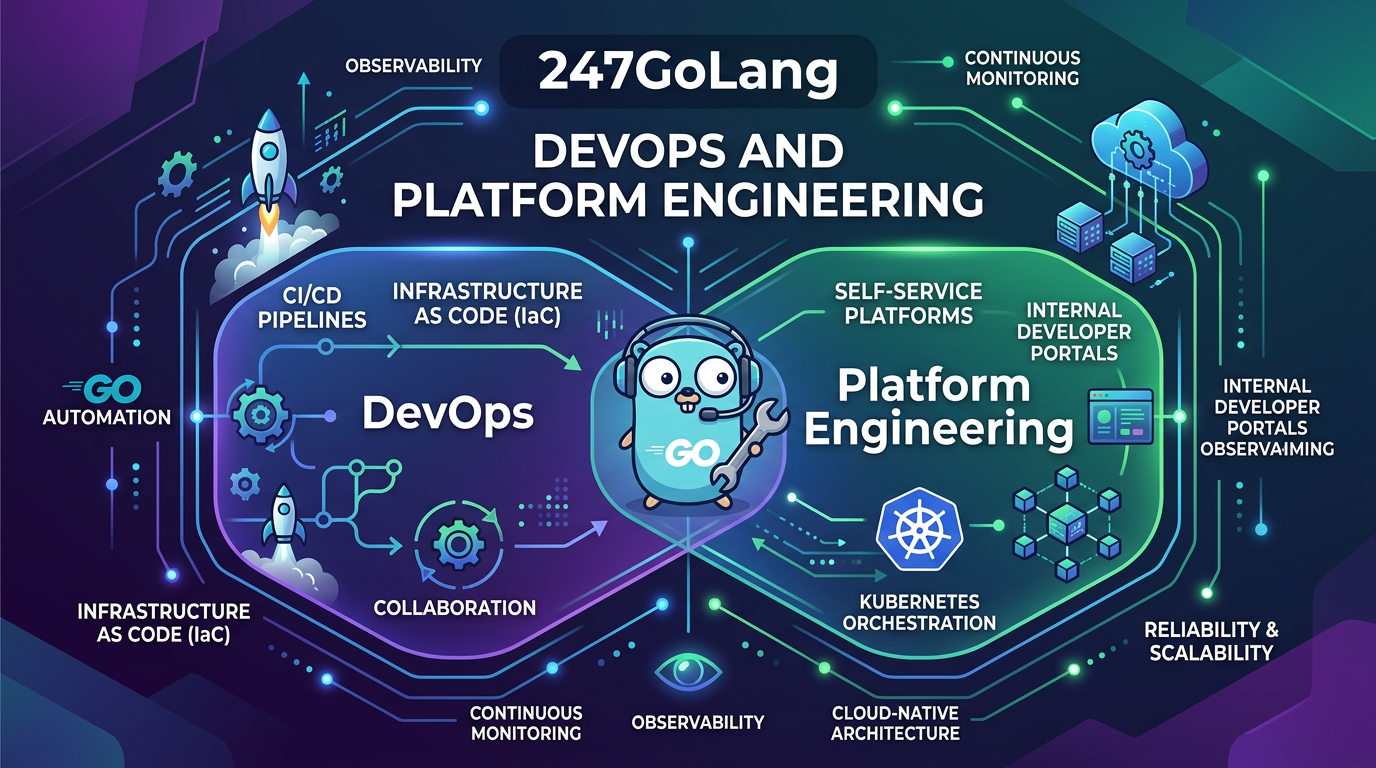

Each card is a room in your Go museum — a domain where Go is used in serious, production-grade systems. These rooms are the starting point for future galleries, case studies, and company directories. Deep-dive pages are coming soon; clicks here help us decide which rooms to open first.
Container orchestration, cloud-native control planes, and distributed services.
CLI tooling, CI/CD systems, infrastructure as code, and observability stacks.
High-performance APIs, multi-tenant products, and microservice backends.
Payment rails, trading engines, risk and reconciliation systems.
Network scanning, security agents, and high-throughput edge services.
Model serving layers, feature pipelines, and high-throughput data services.
Routing, connectivity services, and carrier-grade control systems.
Consensus engines, node clients, and exchange infrastructure.
Matchmaking, sessions, and real-time multiplayer coordination.
Streaming APIs, content delivery, and event-heavy backends.
Edge gateways, device controllers, and ingestion services.
Large-scale internal APIs, shared services, and internal tools.
This page is not about syntax or beginner tutorials. It is about the system-level reasons teams standardize on Go for production workloads.
Go’s design maps cleanly onto cloud-native architectures: high-concurrency services, simple deployments via static binaries, a batteries-included standard library, and a mature tooling ecosystem. That combination makes it a strong default for infrastructure, control planes, and performance-sensitive backends.
This is not an exhaustive list, but a sample of recognizable names you can explore further. Each cluster can become a gallery and case-study collection later.
We're lining up slice-friendly deep dives on themes like concurrency patterns, performance tuning, and enterprise Go migrations. Think of this as the channels between rooms in the Go museum.
Patterns for taming goroutines without deadlocking your brain. Coming soon.
PPROF, flamegraphs, and real-world latency hunts in Go services. Coming soon.
How boring monoliths quietly move to Go-based platforms. Coming soon.
Each industry tile can grow into a gallery: company lists, architectures, hiring signals, and production stories. 247golang can become the reference map for Go in business.